By David Eaheart
Some of my earliest barbecue memories don’t come from barbecue competitions. They come from campground fire pits.
Growing up camping in an RV, supper started with charcoal, newspaper and a chimney starter. We’d light it, sit back and watch. The smoke would rise, the coals would crackle and eventually they would turn that familiar gray.
That was the signal. Not a timer. Not a guess.
That moment is still how I know a fire is ready today.
MOST PEOPLE USE CHARCOAL. FEW START IT RIGHT.
If you’re cooking on charcoal, you’re not alone.
According to the 2026 Prairie Fresh State of BBQ Report, more than 60 percent of grillers use a charcoal grill regularly — which means most people are working with a fuel source that takes a little more technique to master.
But here’s the challenge:
- Most people feel confident using charcoal
- Most people still struggle to light it the right way
That means the biggest opportunity to improve your barbecue isn’t complicated.
It starts with your fire.
THE 5-STEP CHARCOAL START I USE EVERY TIME
If you want better, more consistent results, keep it simple.
- Fill your chimney: Use more charcoal for high heat, less for controlled cooks.
- Light with newspaper or a natural starter: Skip lighter fluid — it creates off-flavors and uneven burns.
- Let it breathe: Airflow is what lights charcoal evenly. The chimney does the work.
- Watch for gray on top; When the coals are fully ashed over, they’re ready.
- Pour and set your zones: Spread for direct heat or bank to one side for more control.
IF YOU ONLY DO ONE THING BETTER
Wait until your coals are fully ashed over before cooking. This is the most common mistake — and the easiest one to fix.
Better fire = better results.
AVOID THESE COMMON MISTAKES
Most charcoal frustration comes down to a few simple things:
- Starting too early
Leads to uneven heat and inconsistent cooking. - Using lighter fluid
Adds unwanted flavor and reduces control. - Closing vents too soon
Charcoal needs oxygen to fully ignite. - Watching the clock instead of the fire
The coals tell you when they’re ready.
SIMPLE TIPS THAT MAKE A BIG DIFFERENCE
- Build a two-zone fire
Hot side for searing, cool side for control. - Match your charcoal to your cook
Lump burns hotter and faster.
Briquettes burn longer and more evenly. - Use your vents
More air = hotter fire
Less air = cooler fire - Be patient
The fire rewards patience every time.
At Prairie Fresh, we spend a lot of time understanding how people barbecue at home. One thing is clear: People don’t need more complexity. They need a few fundamentals that work every time.
The biggest thing I learned standing around those campground fires still applies today. Watch the fire. Trust the coals. Let it come together.
Start there, and you’re already on your way to better barbecue.
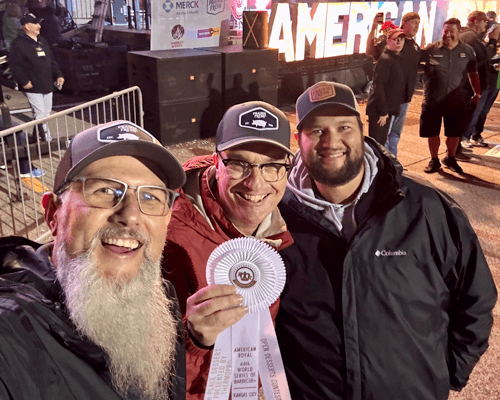
David Eaheart (pictured in the center with Mike Pearce and Joe Pearce of Slap’s BBQ) leads marketing for the Prairie Fresh barbecue portfolio and spends a lot of time around grills, smokers and some of the best pitmasters in the world. He’s a classically trained chef and Certified Barbecue Judge who’s cooked alongside competition teams like Slap’s BBQ and The Shed BBQ. He’s also competed himself, earning top finishes in national food competitions. At the end of the day, he’s all about helping people feel more confident at the grill and get better results in their own backyard.